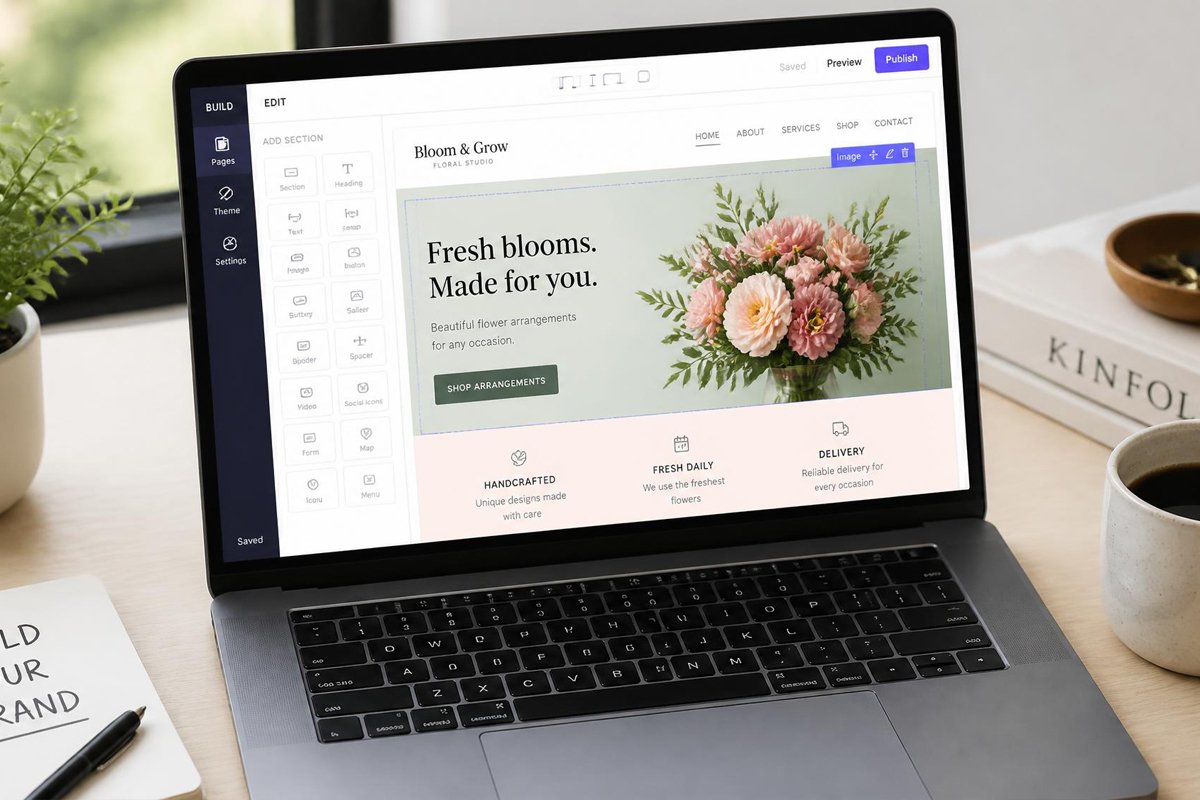
Two founders can sell the exact same product, at the exact same price, in the exact same market — and one of them gets the sale. Often the difference isn’t the offer. It’s that customers already trust the person behind it before the pitch even starts.
That’s what personal branding does. It’s the reason a founder’s LinkedIn post gets shared while the company page’s version gets ignored, and the reason people say “I want to work with her” instead of “I want to work with that agency.” Most business owners either skip this entirely — hiding behind a logo — or do it inconsistently, posting for two weeks and disappearing for two months.
This guide breaks down what personal branding actually is, the channels worth your time, and a step-by-step process to build one without needing a PR budget. If you’re also working on the company side of things, it pairs well with our guide on building a content marketing strategy that generates leads and our breakdown of social media marketing fundamentals.
Quick Answer
Personal branding for business owners means deliberately shaping how you’re perceived online — your expertise, values, and voice — so people trust you before they ever talk to your business. The right channel depends on your goals: founders selling B2B services get the most traction on LinkedIn and long-form content; local business owners benefit most from short-form video and community visibility; consultants and coaches grow fastest through a mix of content, speaking, and press mentions. In every case, consistency beats intensity — a modest weekly habit sustained for a year outperforms a viral week followed by silence.
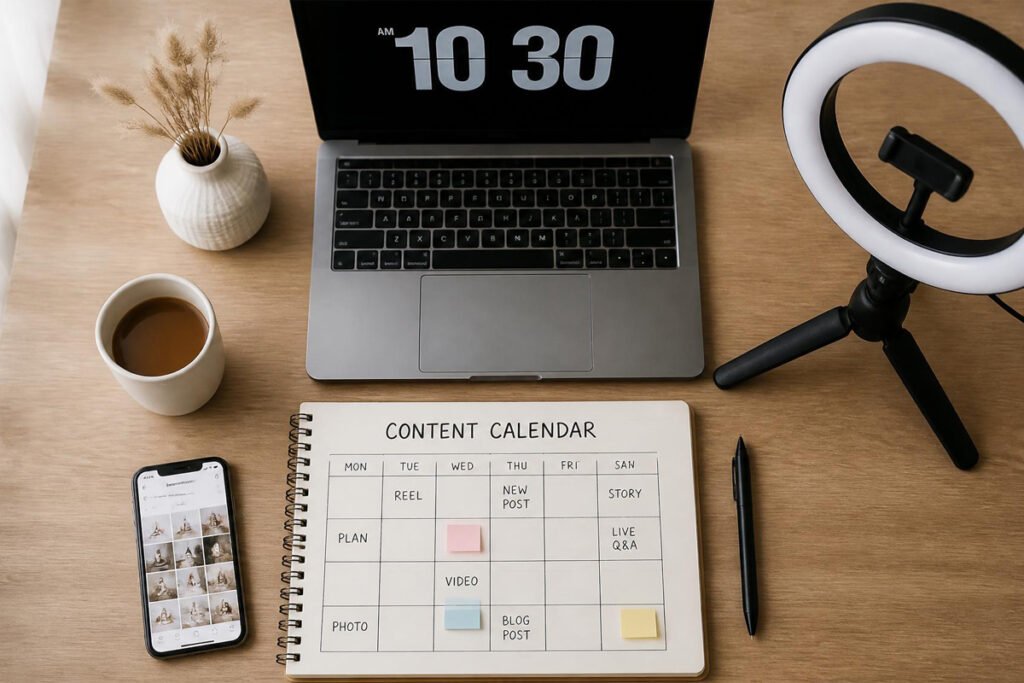
Table of Contents
- What Is Personal Branding?
- How to Choose the Right Personal Branding Approach
- Best Personal Branding Channels
- Personal Branding for Different Business Types
- How to Build Your Personal Brand: Step by Step
- Common Personal Branding Mistakes
- Expert Tips
- Final Thoughts
- FAQ
What Is Personal Branding? (And Why It’s Different From Your Business Brand)
Personal branding is the practice of intentionally managing how you — as an individual — are perceived by the people who might buy from you, hire you, invest in you, or refer you. It sits alongside, but separate from, your business brand, which is about the company: its logo, its positioning, its promise to customers.
The distinction matters because people trust people faster than they trust companies. A business brand can say “we’re the best in the industry.” A personal brand shows it — through the questions you answer publicly, the opinions you’re willing to share, and the results you’re transparent about. That’s why personal branding for business owners has become a core part of modern marketing, not a vanity project for influencers.
It also compounds differently than paid channels. Ad spend stops producing results the moment you stop paying (see our comparison of SEO vs. Google Ads ROI for more on that trade-off). A personal brand, like SEO, keeps working in the background — old posts keep getting found, past interviews keep getting shared, and your name starts showing up in conversations you’re not even part of.
How to Choose the Right Personal Branding Approach
Before picking a channel or posting schedule, answer three questions honestly:
- Where does your audience already spend attention? A brand aimed at other business owners belongs on LinkedIn or in industry newsletters. A brand aimed at local consumers belongs on Instagram, TikTok, or Google Business Profile — see our local SEO guide for how personal visibility and local search overlap.
- What can you sustain for 12 months, not 12 days? Weekly is a habit; daily is a job. Pick the cadence you’ll still keep in month nine.
- What do you actually want people to remember you for? According to the American Marketing Association, consistent brand positioning is one of the strongest predictors of long-term trust and recall — the same principle applies at the individual level, not just the company level.
Best Personal Branding Channels for Business Owners
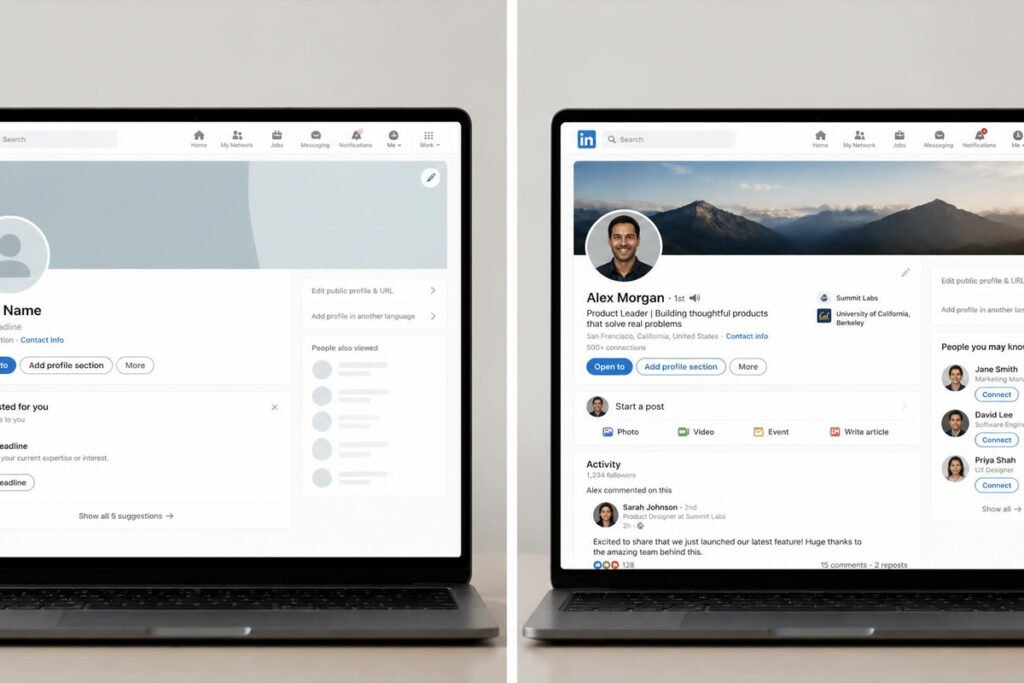
1. LinkedIn Thought Leadership
Overview: LinkedIn remains the default home for B2B personal branding. Posts that share a specific lesson, a contrarian take, or a behind-the-scenes number tend to travel further than generic advice.
Key Features:
- Native long-form posts and short-form updates in one feed
- Direct line to decision-makers without needing a media list
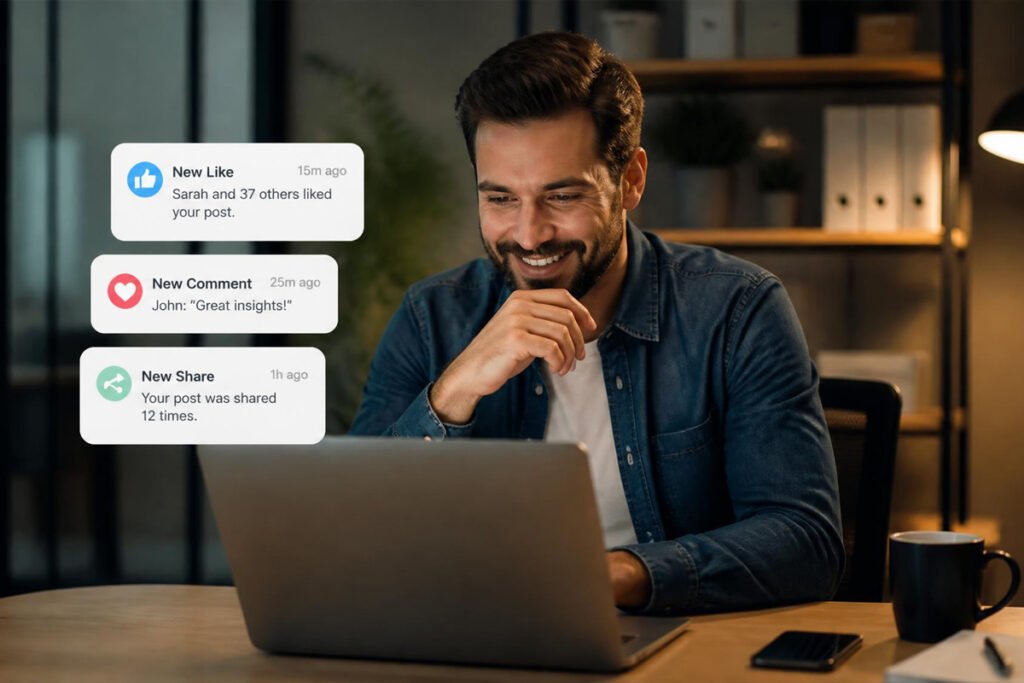
- Comments function as a built-in engagement and lead-qualification layer
Best For: Founders selling B2B services, consultants, agency owners, coaches targeting professionals.
Pros: ✅ High-trust audience ✅ Low cost to start ✅ Long shelf life per post Cons: ❌ Slower growth than short-form video ❌ Requires genuine opinions, not just tips
Our Verdict: If you only have time for one channel, this is usually it for service-based businesses. Pair it with our content marketing strategy guide to turn posts into a repeatable system rather than one-off updates.
2. Short-Form Video (Reels, TikTok, YouTube Shorts)
Overview: Video builds recognition faster than text because viewers connect a face and voice to the brand within seconds.
Key Features:
- Highest organic reach potential of any format right now
- Repurposable into multiple platforms from a single recording
- Works especially well for local and consumer-facing businesses
Best For: Local business owners, product-based founders, anyone comfortable on camera.
Pros: ✅ Fast audience growth ✅ Strong for brand recall ✅ Cheap to produce with a phone Cons: ❌ Time-intensive to script and edit ❌ Algorithm-dependent reach
Our Verdict: Best paired with a real video production plan rather than posting randomly — a simple weekly format (a recurring segment, a consistent intro) outperforms one-off clips.
3. Long-Form Content: Blog, Newsletter, or Podcast
Overview: Long-form content is where personal branding and SEO overlap most directly — a well-written article under your byline builds authority and gets discovered organically for years.
Key Features:
- Doubles as evergreen search traffic (see our complete SEO checklist)
- Establishes depth of expertise that short-form content can’t
- Naturally shareable as a credibility asset (send the link instead of re-explaining)
Best For: Consultants, agency founders, anyone selling high-consideration services.
Pros: ✅ Compounds over time ✅ Strong credibility signal ✅ Reusable across other channels Cons: ❌ Slowest format to show early results ❌ Requires real subject-matter depth
Our Verdict: Treat it as infrastructure, not a quick win. It’s the format most likely to still be working for you two years from now.
4. PR and Media Mentions
Overview: Third-party validation — a podcast guest spot, an industry roundup, a quoted opinion — carries more weight than self-published content because someone else is vouching for you.
Key Features:
- Builds credibility signals that self-published content can’t replicate
- Often the fastest route to reaching an audience you don’t already have
- Reusable as “as featured in” social proof across your website and pitches
Best For: Founders ready to pitch stories, not just post updates.
Pros: ✅ High-trust signal ✅ Reaches new audiences ✅ Strong long-term credibility Cons: ❌ Slower and less predictable ❌ Requires pitching, not just publishing
Our Verdict: Start small — local press, niche podcasts, guest posts — before chasing national coverage. Our PR services page covers this in more depth if you want a structured pitch process.
5. A Personal Website or Portfolio
Overview: Social platforms are rented land — algorithms change, accounts get flagged, reach fluctuates. A personal site is the one asset you fully control.
Key Features:
- Central hub linking to every other channel
- Ranks independently in search for your name and expertise
- Doubles as a credibility check when someone Googles you before a call
Best For: Every business owner building a brand, regardless of primary channel.
Pros: ✅ You own the asset ✅ Reinforces search visibility ✅ Professional first impression Cons: ❌ Needs occasional upkeep ❌ Doesn’t drive discovery on its own
Our Verdict: Not a growth channel by itself, but the foundation everything else should point back to.
Comparison Table
| Channel | Best For | Time Investment | Cost | Growth Speed |
|---|---|---|---|---|
| LinkedIn Thought Leadership | B2B founders, consultants | Medium (weekly) | Free | Moderate, compounding |
| Short-Form Video | Local & consumer brands | High (scripting/editing) | Low | Fast |
| Long-Form Content (blog/podcast) | High-consideration services | High (per piece) | Low–Medium | Slow, durable |
| PR & Media Mentions | Founders ready to pitch | Medium (pitching) | Low–Medium | Slow, high-trust |
| Personal Website | Everyone | Low (after setup) | Low | N/A (supporting asset) |
Personal Branding for Different Business Types

Solopreneurs & Coaches
If you are the business, your personal brand and business brand are effectively the same thing. Lean into long-form and LinkedIn content that documents your actual process — client wins framed as lessons, not testimonials — and connect it to a clear content creation system so you’re not starting from a blank page every week.
Local Business Owners
Customers choosing between two nearby options often pick the one where they’ve “met” the owner online first. Short videos showing your team, your process, or your storefront do more for trust than another discount post — and they reinforce the same visibility your local SEO efforts are already building through Google Maps and reviews.
B2B and Agency Founders
Buyers in longer sales cycles research the founder before the company. A steady drumbeat of LinkedIn posts plus the occasional podcast guest spot builds the “I’ve seen this person before” familiarity that shortens the eventual sales conversation. This works especially well alongside paid media — warm audiences convert at a different rate than cold ones.
How to Build Your Personal Brand: Step by Step
Step 1: Define Your Positioning
Write one sentence: “I help [who] do [what] without [common pain point].” If you can’t fill that in specifically, your content will stay generic too.
Step 2: Audit Your Current Presence
Search your own name. Check what a prospect sees on your LinkedIn, your website, and your Google results. Fix the obvious gaps — outdated bio, broken links, inconsistent profile photo — before adding new content on top.
Step 3: Pick One Primary Channel
Resist the urge to launch on five platforms at once. Choose the channel from the comparison table above that matches your audience and your realistic time budget, and commit to it for at least 90 days before judging results.
Step 4: Build a Repeatable Content Cadence
A simple weekly rhythm — one core post, repurposed into two or three smaller pieces — beats sporadic bursts. This is the same principle behind our content marketing strategy framework: consistency compounds, one-off effort doesn’t.
Step 5: Track and Refine
Watch which specific posts drive replies, profile visits, or inbound messages — not just likes. Double down on the topics and formats that generate actual conversations, and retire the ones that don’t.
<a id=”common-mistakes”></a>
Common Personal Branding Mistakes
Posting only promotional content. A feed that’s all offers and no insight trains people to scroll past you. Mix in the lessons, opinions, and behind-the-scenes context that make people want to follow, not just buy.
Disappearing after a slow start. Most personal brands look like they’re not working for the first few months because trust is invisible until it isn’t. Compare this to SEO mistakes that kill rankings — the pattern is the same: quitting right before compounding kicks in.
Sounding like a press release. Overly polished, corporate-toned posts read as inauthentic. The posts that build trust fastest usually sound like a person talking, not a brand guideline being followed.
Expert Tips
Document, don’t just create. Instead of only publishing polished takeaways, show the in-progress work — a screenshot of a real result, a half-finished idea you’re testing. It reads as more credible than another neatly packaged tip.
Reuse one idea across formats. A single client lesson can become a LinkedIn post, a short video script, and a newsletter paragraph. You don’t need three times the ideas — you need better repurposing of the ones you already have.
Let your business brand and personal brand reinforce each other. Your company’s SEO and social media presence should occasionally point back to you as a person, and vice versa — neither should exist in isolation.
Final Thoughts
There’s no single “best” personal branding channel — only the best fit for your audience and your bandwidth. Best overall starting point: LinkedIn plus a personal website, for most service-based founders. Best for local businesses: short-form video paired with your Google Business Profile. Best for long-term authority: long-form content and PR, even though it’s the slowest to show results. Best for beginners: pick one channel, post weekly, and give it a real 90 days before adding a second.
Whichever path you choose, the goal is the same one behind every other channel we cover — from Google Ads to SEO to social media: building trust before the sales conversation even starts.
Frequently Asked Questions
Do I really need a personal brand if my business already has a brand? Not always, but it helps most for service-based and relationship-driven businesses, where customers are, in part, buying trust in a person. Product-only businesses with little owner visibility can rely more heavily on the business brand alone.
How long does it take to build a personal brand? Most owners see early traction — replies, profile visits, inbound messages — within 60–90 days of consistent posting. Meaningful recognition in your industry typically takes 6–12 months of sustained effort.
How much time should I budget per week? A sustainable starting point is 2–4 hours weekly: one core piece of content plus repurposing it into two or three smaller posts. More time helps, but consistency matters more than volume.
LinkedIn vs. Instagram — which is better for personal branding? LinkedIn tends to work better for B2B, consulting, and professional services. Instagram and short-form video generally work better for consumer-facing, local, and visually driven businesses.
Do I need a professional photographer or videographer to start? No. A clean phone photo and decent lighting are enough to begin. Invest in professional production once you have a consistent format worth investing in, not before.
What if I’m not comfortable being on camera? Text-based platforms like LinkedIn or a blog work just as well — the goal is consistent, opinionated content, not necessarily video specifically.
Should employees also build personal brands, or just the owner? Both can work well together. Employee advocacy amplifies reach, but the owner’s brand usually carries the most weight for trust-building with prospects and press.
How does personal branding affect SEO? Content published under a real, credible byline supports topical authority and can improve how search engines and AI answer engines evaluate expertise — a theme we cover in why SEO is evolving into SEO + AEO.
What’s the difference between personal branding and just being active on social media? Being active means posting. Personal branding means posting with a consistent point of view and positioning, so what you post today builds on what you posted last month instead of feeling random.
Can I outsource personal branding, or does it have to come from me directly? The strategy, ghostwriting, and production can be outsourced — but the opinions, stories, and voice need to stay authentically yours, or the trust it’s meant to build won’t hold up.
Author: DIGI MONETIZE Team Last Updated: August 2026