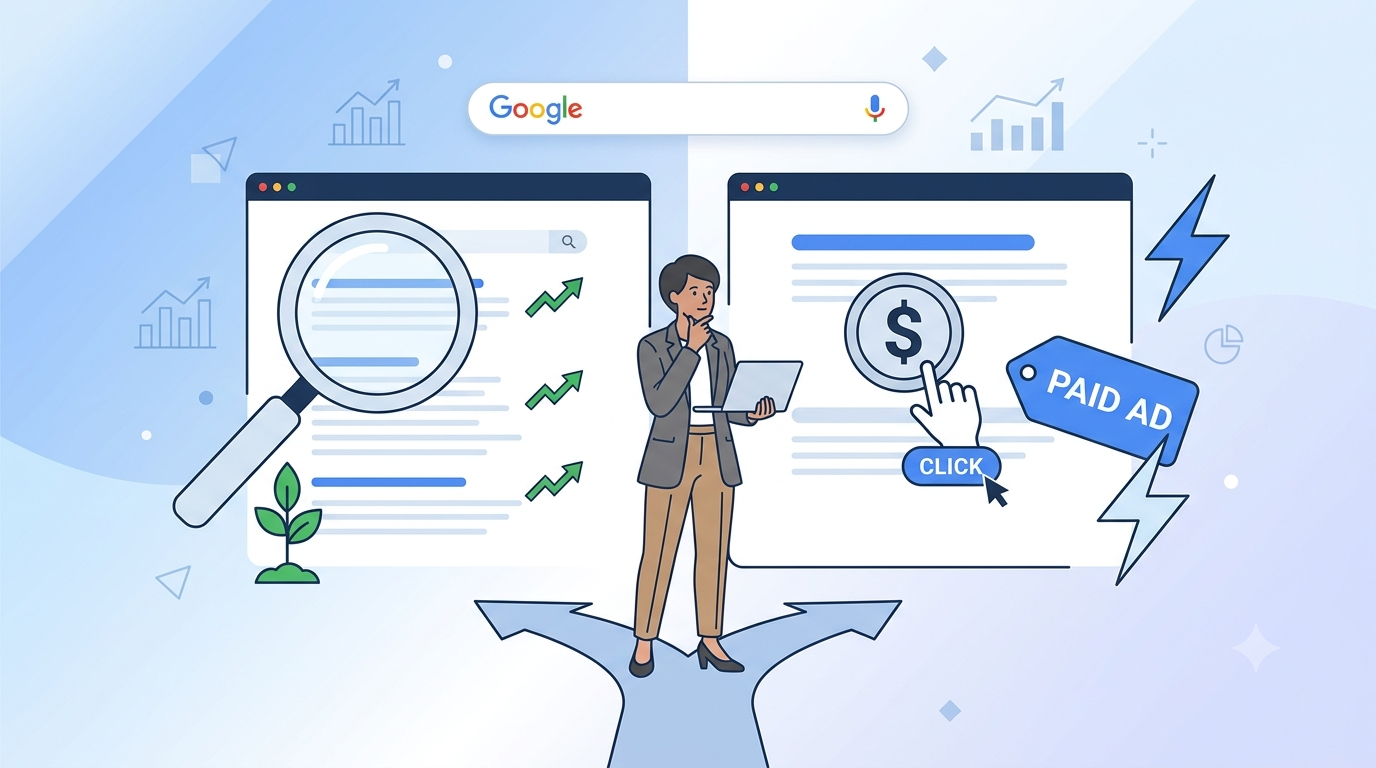
You’ve got a great product, a great team, and happy customers — but somehow, the business two blocks away with average reviews and a mediocre website keeps showing up first when people search on Google. Meanwhile, you’re barely visible on the map.
This is one of the most common frustrations for small business owners, and it almost always comes down to one thing: Local SEO.
If you run a local business — a restaurant, a clinic, a salon, a repair shop, a real estate agency, or any service that depends on nearby customers — Local SEO is how you turn “searching nearby” into “walking through your door” or “picking up the phone.” This guide walks through exactly how it works and what to do about it, step by step, without the jargon or the empty promises.
What Is Local SEO?

Local SEO is the practice of optimizing your online presence so your business shows up when people nearby search for what you offer. It’s different from traditional SEO in one key way: instead of competing to rank for a keyword nationally or globally, you’re competing to be the best answer for someone searching near a specific location — often on Google Maps or in the “local pack” (the map and three-listing block that appears above regular search results).
Traditional SEO might try to rank a blog post for “best running shoes” for the whole country. Local SEO focuses on things like “running shoe store in Dhaka” or “shoe repair near me” — searches with clear local intent, usually made by someone ready to visit, call, or buy soon.
The two work together. Your website still needs good SEO fundamentals, but Local SEO adds a layer built around your Google Business Profile, your location data, your reviews, and local signals that tell Google (and searchers) that you’re a real, trustworthy, nearby option.
Why Google Maps Matters for Local Businesses
Google Maps isn’t just a navigation tool anymore — for many businesses, it’s the new homepage. When someone searches for a product or service near them, Google often shows the map pack before any website links. A strong presence there can directly generate:
- Calls — customers tapping “Call” straight from your listing
- Website visits — people clicking through to learn more
- Direction requests — someone deciding to visit your location
- Store visits and walk-ins — especially for retail and restaurants
- Bookings and appointments — for clinics, salons, and service providers
- Leads — inquiries through messaging or contact forms
- Sales — the end result of all of the above
For many local businesses, especially those without a large marketing budget, an optimized Google Business Profile can outperform paid ads in cost-effectiveness — because it captures people who are already looking for exactly what you offer.
How Google Maps Rankings Work
Google has said that local rankings are primarily influenced by three factors:
| Factor | What It Means |
| Relevance | How well your business profile matches what the searcher is looking for |
| Distance | How close your business (or service area) is to the searcher or the location they searched |
| Prominence | How well-known and reputable your business is, based on signals like reviews, links, and overall online presence |
A few important things to understand:
- Rankings aren’t fixed. The same search can return different results depending on the searcher’s exact location, the device they’re using, and even small variations in how they phrase the query.
- You can’t fully control distance, but you can influence relevance and prominence.
- Competition matters. A dentist in a small town might rank easily, while a dentist in a dense city center is competing against dozens of well-optimized profiles.
Because of these variables, be cautious of anyone promising a guaranteed top position. What you can do is consistently strengthen the signals within your control — and that’s what the rest of this guide focuses on.
Set Up and Optimize Your Google Business Profile
Your Google Business Profile (GBP) is the foundation of Local SEO. Here’s how to set it up properly:
- Business name — Use your real, legal business name exactly as it appears on your signage and website. Don’t add keywords like “Best Plumber in Dhaka” to your name — this violates Google’s guidelines and can get your profile suspended.
- Primary category — Choose the category that most accurately describes your core business (e.g., “Italian Restaurant” rather than just “Restaurant”).
- Secondary categories — Add relevant additional categories that reflect other services you genuinely offer.
- Business description — Write a clear, honest description of what you do, who you serve, and what makes you different. Avoid keyword stuffing.
- Address or service area — If customers visit you, use your exact address. If you travel to customers (like a mobile mechanic or cleaning service), set a service area instead.
- Phone number — Use a local, working number that matches what’s listed on your website.
- Website — Link to your actual website, ideally a page relevant to that location.
- Business hours — Keep these accurate, including holiday hours — nothing frustrates customers more than showing up to a closed business.
- Services and products — List these in detail so Google understands what you offer.
- Photos and videos — Add current, high-quality visuals (more on this below).
- Booking or contact options — Enable messaging, booking links, or appointment URLs where relevant.
Choose the Right Google Business Profile Categories
Categories are one of the most overlooked but powerful ranking signals. Choosing the wrong ones — or too many irrelevant ones — can actually hurt your visibility.
- Your primary category should reflect the main thing customers come to you for. A bakery that also serves coffee should likely still be primarily categorized as “Bakery,” not “Coffee Shop,” if baked goods are the main business.
- Secondary categories should only include services you genuinely and regularly provide. A hair salon that occasionally does makeup for events could add “Makeup Artist” as a secondary category — but a salon that doesn’t offer manicures shouldn’t add “Nail Salon” just to appear in more searches.
- Review your categories periodically as your services evolve.
Optimize Your Business Information for Local Search
Beyond your Google profile, your broader online presence needs to reinforce the same information consistently.
NAP consistency — NAP stands for Name, Address, and Phone number. Your NAP should be identical across your website, Google Business Profile, social media, and any directories you’re listed on. Inconsistencies (like “St.” in one place and “Street” in another) can confuse Google and weaken your local relevance.
Website information — Make sure your address, phone number, and hours are clearly visible, ideally in the footer of every page.
Local keywords — Naturally include your city, neighborhood, or service area in page titles, headings, and body content — without forcing it into every sentence.
Service pages — If you offer multiple services, give each one its own page rather than cramming everything onto a single “Services” page.
Location pages — If you serve multiple areas or have multiple branches, create a dedicated page for each one (more on this in the multi-location section below).
Get More and Better Customer Reviews
Reviews are one of the strongest prominence signals Google uses, and they directly influence whether a potential customer chooses you over a competitor.
Why reviews matter:
- They build trust with both Google and customers.
- A higher volume of recent, genuine reviews signals an active, reputable business.
- Detailed reviews often contain keywords that reinforce your relevance.
How to ethically request reviews:
- Ask happy customers directly, right after a positive interaction.
- Send a simple follow-up message or email with a direct link to your review page.
- Make it easy — the fewer clicks required, the better.
Example request:
“Thanks so much for visiting us today! If you have a minute, we’d really appreciate a quick review — it helps other customers in the area find us. [Review link]”
Responding to reviews:
- Positive reviews — Thank the customer by name where appropriate, and mention something specific about their visit.
- Negative reviews — Respond calmly and professionally, acknowledge the concern, and offer to resolve it offline if needed. Never argue publicly.
Never buy or fabricate reviews. Fake reviews violate Google’s policies, can lead to profile suspension, and damage long-term trust once discovered.
Add High-Quality Photos and Videos
Profiles with strong visual content tend to get more engagement. Consider uploading:
- Storefront photos (helps customers recognize your location)
- Interior photos (builds trust before someone visits)
- Product photos
- Photos of services being performed
- Team photos (adds a human, trustworthy element)
- Before-and-after images, where relevant (e.g., salons, contractors, cleaning services)
- Short videos showing your space, products, or process
Update photos regularly — an outdated storefront image, especially after a renovation or rebrand, can create a mismatch between expectations and reality.
Build Local Citations
Local citations are online mentions of your business’s name, address, and phone number, typically found on directories, industry websites, and local platforms — even if they don’t link back to your site.
Consistent citations across relevant, reputable directories reinforce your business’s legitimacy and location to Google. Focus on:
- General business directories relevant to your country or region
- Industry-specific directories (e.g., legal, medical, home services)
- Local chamber of commerce or business association listings
- Review platforms relevant to your industry
Quality matters more than quantity — a handful of consistent, relevant citations is more valuable than dozens on low-quality or spammy sites.
Create Local SEO-Friendly Website Content
Your website should reinforce, not compete with, your Google Business Profile. Key elements include:
- Location pages — a dedicated page per physical location or service area, with unique content (not copy-pasted between locations).
- Service pages — detailed pages for each core service, ideally connected to relevant location pages.
- Local keyword targeting — natural mentions of your city or region in titles, headers, and body copy.
- Internal linking — connect related service and location pages to help both users and Google understand your site structure.
- Contact page — with a clear address, phone number, hours, and an embedded map.
- Embedded Google Map — makes it easy for visitors to get directions and reinforces your address to Google.
Build Local Backlinks
Backlinks from other local, relevant websites act as a vote of confidence in your business. Ethical ways to earn them include:
- Partnering with local organizations or nonprofits
- Getting listed on community or neighborhood websites
- Collaborating with complementary local businesses (e.g., a florist and a wedding photographer)
- Being featured in local media or news coverage
- Sponsoring local events, sports teams, or fundraisers
- Getting listed in reputable industry-specific directories
- Participating in or hosting local events that generate coverage
Avoid buying links or joining link schemes — these can violate Google’s guidelines and create more harm than benefit.
Create Content That Targets Local Customers
Content built around local intent helps attract customers earlier in their search, before they even reach the map pack. Examples include:
- “Best [service] in [city]” style guides (written honestly, not just self-promotional)
- “[Service] near [neighborhood]” pages for larger service areas
- Local guides (e.g., “A Local’s Guide to [Neighborhood]” for a business with community ties)
- Content around local events your business is involved in
- FAQ-style content answering common local customer questions
Optimize for “Near Me” Searches
“Near me” searches have become extremely common, but here’s the reality: Google doesn’t rank you higher just because you’ve stuffed “near me” into your content. Google determines proximity using the searcher’s actual location combined with your verified address or service area.
Instead of repeating “near me” throughout your website, focus on:
- Keeping your address and service area accurate and up to date
- Strengthening overall relevance and prominence signals
- Writing naturally about your location and services
The businesses that win “near me” searches are the ones with strong, accurate, well-optimized profiles — not the ones that mention “near me” the most times.
Local SEO for Multiple Locations
If you operate more than one branch, each location should have:
- Its own Google Business Profile, verified separately
- Its own unique website location page (not a duplicate template with only the address swapped)
- Location-specific details like staff, hours, parking information, or services unique to that branch
- Consistent NAP information specific to that location
Avoid creating thin, near-duplicate pages purely to target more cities — Google can recognize this pattern, and it can dilute the value of all your location pages rather than helping any of them.
Common Local SEO Mistakes to Avoid
- Keyword stuffing — forcing keywords unnaturally into your business name, description, or content
- Fake business locations — listing an address you don’t actually operate from
- Buying fake reviews — a major policy violation with long-term reputational risk
- Incorrect categories — choosing categories that don’t reflect your actual services
- Inconsistent NAP information — mismatched details across your website, profile, and directories
- Duplicate Google Business Profiles — multiple listings for the same location, which confuses both Google and customers
- Ignoring reviews — never responding, especially to negative ones
- Low-quality or outdated photos
- Neglecting the website — treating Google Business Profile as the only thing that matters
- Using outdated business information, like old hours, phone numbers, or services
How to Track Local SEO Performance
You don’t need advanced tools to start measuring progress. Keep an eye on:
- Google Business Profile interactions — views, searches, and actions taken on your profile
- Calls generated directly from your listing
- Website clicks from your profile
- Direction requests
- Search visibility — how often and where your profile appears
- Local rankings for your key search terms
- Organic website traffic from local searches
- Leads generated through forms, messages, or calls
- Conversions — bookings, purchases, or signed contracts
- Revenue tied back to local search activity, where trackable
Reviewing these metrics monthly helps you understand what’s working and where to focus next.
How Long Does Local SEO Take?
There’s no fixed timeline, and anyone promising specific results by a specific date should be treated with caution. Results depend on several factors:
- Competition in your industry and area
- Location — dense urban markets are typically more competitive than smaller towns
- Industry — some industries (like legal or medical) are more saturated than others
- Existing authority — how established your website and profile already are
- Website quality — technical health, content, and user experience
- Review volume and quality
- How well your Business Profile is optimized
- Consistency — Local SEO is not a one-time task; ongoing effort tends to produce better, more durable results than a single optimization push
Some businesses see meaningful movement within a couple of months, especially in less competitive areas. Others, particularly in crowded markets, may take longer. What matters most is steady, consistent effort rather than short-term tactics.
Conclusion
Local SEO isn’t about tricking an algorithm — it’s about making it as easy as possible for Google, and for real customers, to understand that your business is relevant, trustworthy, and nearby. Start with a fully optimized Google Business Profile, keep your information consistent everywhere it appears, earn genuine reviews, and build a website that supports your local presence rather than working against it. There are no real shortcuts here. But businesses that consistently invest in visibility, trust, relevance, and a genuinely good customer experience tend to build a local search presence that keeps paying off long after any single tactic wears out