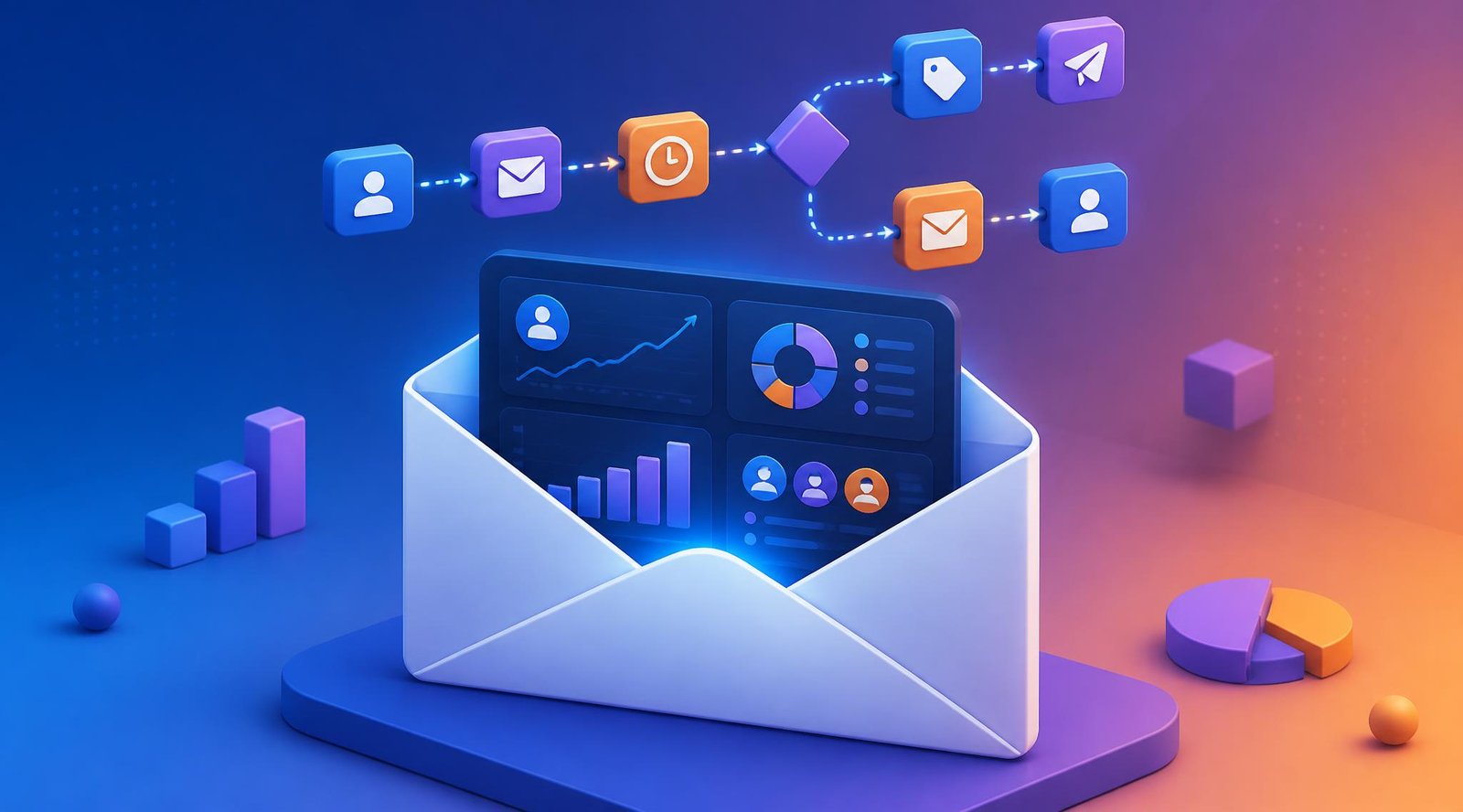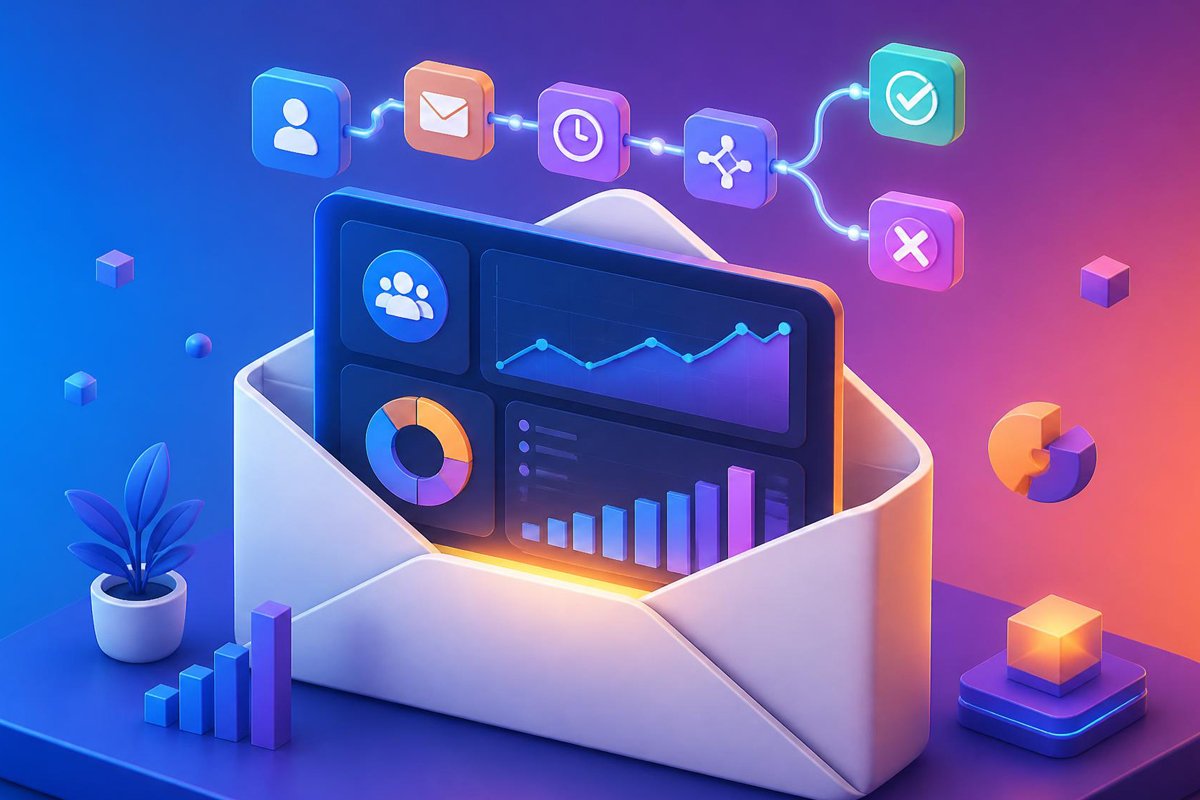
Every year, someone declares email marketing “dead” — and every year, it keeps quietly outperforming almost every other digital channel on return per dollar spent. The reason is simple: unlike social media reach or search rankings, your email list is an asset you fully own. No algorithm change can hide your message from a subscriber who’s already said yes to hearing from you. For small businesses trying to make every marketing dollar count, that ownership is enormously valuable.
Yet most small businesses treat email as an afterthought — a occasional newsletter sent whenever there’s time, with no strategy behind who receives what or why. This guide walks through how to build an email marketing system that actually generates revenue: from growing your list the right way, to automating the emails that do the selling for you, to measuring what’s working so you can improve month over month.
Why Email Marketing Still Delivers the Best ROI
Search engines change their algorithms. Social platforms change what they show in the feed. Ad costs rise every year as more advertisers compete for the same clicks. Email is different — once someone subscribes, you can reach them directly, as often as makes sense, without paying a platform for the privilege each time.
This is also why email pairs so well with almost every other channel covered in our Complete Digital Marketing Guide for Small Businesses. Traffic from SEO and social media is valuable, but most visitors won’t buy on their first visit. Email is the bridge that keeps that traffic from disappearing forever — it captures interest today and nurtures it into a sale over the following days, weeks, or months.
The businesses that get the most out of email aren’t necessarily sending the most emails. They’re sending the right emails, to the right people, at the right time — which starts with how you build your list in the first place.
Step 1: Build Your Email List the Right Way
The single biggest email marketing mistake small businesses make is trying to sell before they’ve earned permission to speak. Nobody hands over their email address for nothing — you need to offer something worth that exchange.
The most effective list-building approach is a dedicated lead magnet: a specific, valuable piece of content offered in exchange for an email address. This could be a discount code, a checklist, a free consultation, or a short guide relevant to your industry. Whatever you choose, the offer should be presented on a page built specifically for that purpose, not buried in your homepage’s footer.
This is exactly where a well-designed landing page comes in. A generic “Sign up for our newsletter” box converts poorly because it doesn’t answer the visitor’s real question: what’s in it for me? Our guide on How to Create Landing Pages That Convert Visitors Into Leads covers exactly how to structure an offer page so visitors feel motivated to hand over their email address — the same principles apply whether you’re capturing a lead for a sales call or a newsletter subscriber.
Once you have a strong lead magnet and landing page in place, drive traffic to it from every channel you already have: link it in your social media bio, mention it in relevant blog posts, and consider a small paid campaign specifically to grow the list, since a bigger list means a bigger pool of people you can market to for free, indefinitely.
Beyond your lead magnet, a few additional tactics compound your list growth over time. If you have a physical location, a simple QR code at checkout or on receipts pointing to your sign-up page captures customers who are already engaged with your brand in person. If you run events or webinars, registration itself is a natural list-building moment — attendees are already showing interest, so asking for an email address feels like a normal next step rather than an interruption. And if your existing customers are happy with your product or service, a referral incentive that rewards them for sharing your sign-up link with friends can bring in subscribers who arrive already trusting your brand.
Step 2: Choose the Right Email Platform
You don’t need the most expensive tool on the market — you need one that matches your current list size and technical comfort level. Most small businesses start with platforms like Mailchimp, Klaviyo, or ActiveCampaign, all of which offer visual automation builders, segmentation tools, and reasonably priced entry tiers.
What actually matters more than the specific platform is whether it supports three core features: automation (sending emails based on triggers, not just manual sends), segmentation (grouping subscribers by behavior or interest), and clear analytics (open rates, click rates, and revenue attribution if you sell online). If your current platform is missing any of these, it’s worth switching before your list grows large enough that migration becomes painful.
Step 3: Segment Your List Instead of Blasting Everyone
Sending the same email to your entire list — brand-new subscribers and five-year customers alike — is one of the fastest ways to tank your engagement. A new subscriber who just downloaded your lead magnet isn’t ready for a hard sales pitch. A loyal repeat customer doesn’t need to be re-introduced to your business basics.
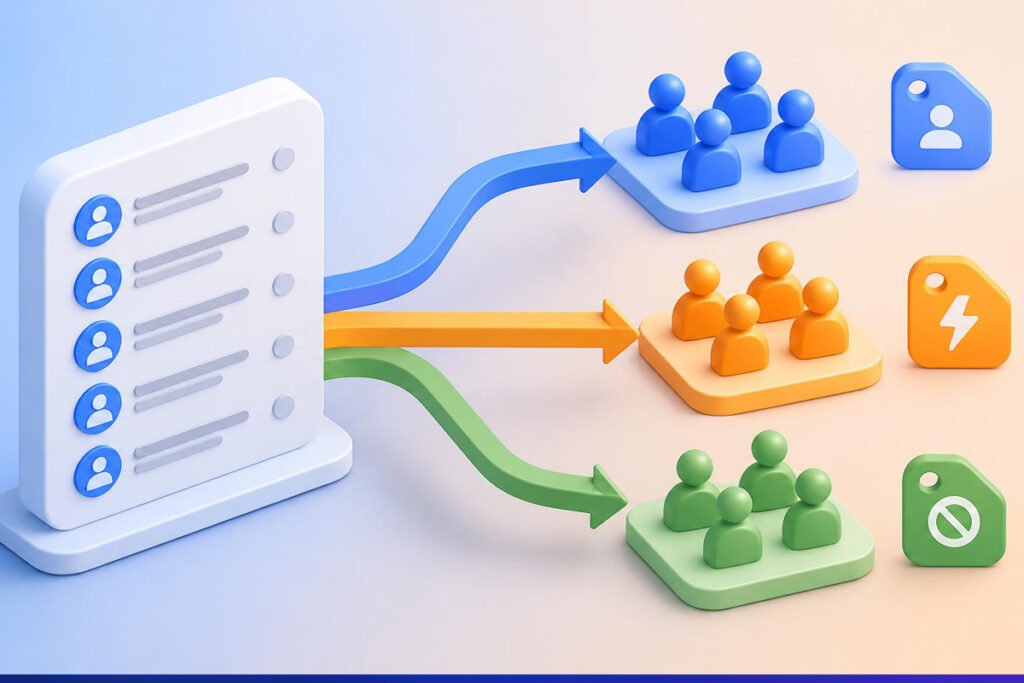
Segmentation solves this by grouping subscribers based on where they are in the relationship with your brand: new subscribers, active customers, high-value customers, and inactive subscribers who haven’t opened an email in months. Each group should receive different content tailored to what they actually need to hear next.
Start simple. Even splitting your list into just “new” versus “existing customers” and adjusting your messaging accordingly will noticeably improve engagement compared to a one-size-fits-all approach. As your list and data mature, you can add more granular segments based on purchase history, browsing behavior, or engagement level.
Step 4: Automate the Emails That Sell While You Sleep
Automation is where email marketing shifts from a manual chore to a system that works around the clock. Instead of remembering to email every new subscriber individually, you set up a sequence once, and it runs automatically for every person who joins your list from that point forward.
A few automated sequences deliver outsized value for the setup effort involved:
- Welcome sequence: Sent immediately after someone joins your list, introducing your brand and delivering the promised lead magnet.
- Abandoned cart sequence (for e-commerce businesses): A gentle reminder sent to visitors who added a product to their cart but didn’t complete checkout — often the single highest-converting automation a store can set up.
- Post-purchase sequence: Follow-up emails after a sale, encouraging reviews, cross-sells, or simply confirming a great buying decision.
- Re-engagement sequence: Sent to subscribers who haven’t opened an email in several months, either winning them back or cleanly removing them from your list to protect your sender reputation.
If AI tools are part of your workflow, this is also where they can meaningfully speed up your process — from drafting subject line variations to summarizing customer feedback into email content ideas. Our guides on How to Make Money with AI and The 4 AI Skills You Must Learn Before 2028 cover practical ways to fold AI into everyday marketing tasks like these, without losing the personal tone that makes email effective in the first place.
Step 5: Write Emails People Actually Want to Open
Even the best-segmented, best-automated email fails if nobody opens it. Two things drive open rates more than anything else: your subject line and your sender name. A subject line that feels like a real person wrote it — specific, a little conversational, occasionally even a touch playful — consistently outperforms generic marketing-speak like “Big Sale This Week!”
Once someone opens the email, the body copy has one job: get them to take the next step, whether that’s clicking through to an article, a product page, or a booking link. Keep the structure simple — one main idea per email, one clear call-to-action, and enough personality that it doesn’t read like it was written by committee.
If you’re already investing in content marketing, email is one of the easiest ways to get more mileage out of that work. Every blog post can become an email to your list, extending its reach beyond just organic search traffic. Our guide on How to Build a Content Marketing Strategy That Generates Leads covers how to plan content that works double-duty this way — useful on your blog and valuable as email content.
Step 6: Protect Your Deliverability
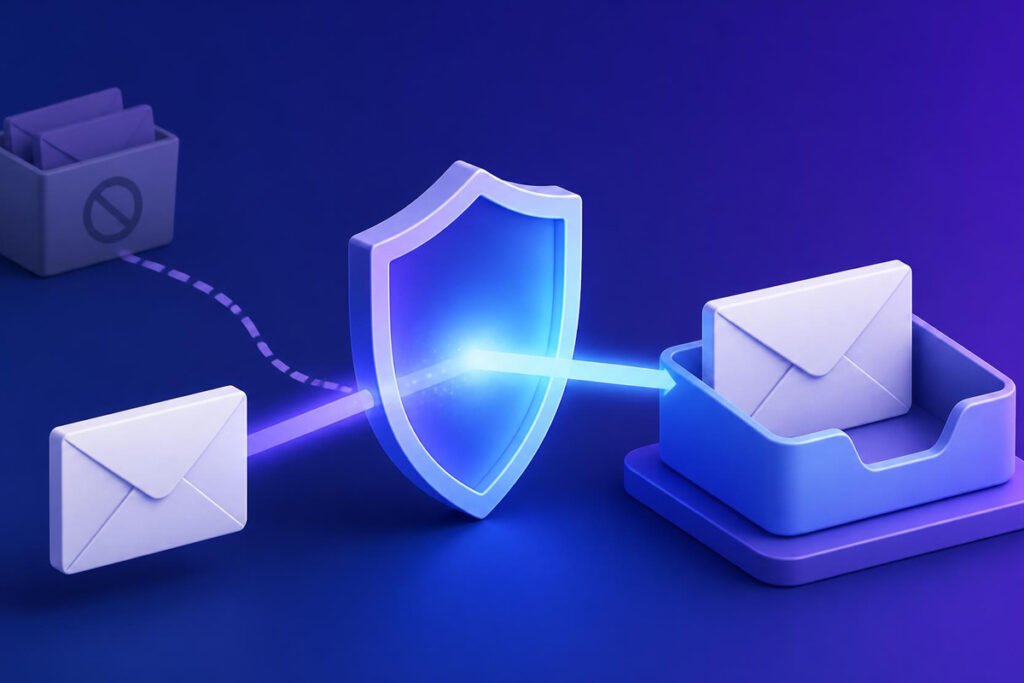
None of the above matters if your emails land in spam instead of the inbox. Deliverability is a technical, ongoing responsibility, not a one-time setup task. A few fundamentals go a long way:
- Authenticate your domain with SPF, DKIM, and DMARC records so email providers trust that your emails genuinely come from you.
- Never buy email lists. Purchased lists are full of invalid addresses and uninterested recipients, both of which damage your sender reputation quickly.
- Remove or re-engage inactive subscribers regularly rather than letting your list grow stale, since low engagement rates signal to inbox providers that your emails might not be wanted.
- Warm up new sending domains gradually, starting with smaller send volumes before ramping up to your full list size.
Deliverability problems tend to creep up slowly and are easy to miss until open rates have already dropped significantly — building good habits early prevents most of these issues before they start.
Step 7: Measure What Actually Matters
Open rates and click rates are useful early indicators, but they aren’t the finish line. The number that actually matters is revenue or leads generated per email sent — a campaign with a modest open rate but strong conversions is doing its job better than one with a flashy open rate and no resulting sales.
Track these numbers consistently:
- Open rate: How many recipients opened the email — a rough signal of subject line and sender reputation strength.
- Click-through rate: How many recipients clicked a link inside — a signal of how compelling your content and offer were.
- Conversion rate: How many recipients completed the desired action after clicking — the number that ties email directly to business results.
- List growth rate vs. unsubscribe rate: Whether your list is healthily growing or quietly shrinking beneath the surface.
Review these monthly alongside your other channels. This ties directly into the broader measurement approach covered in our Complete Digital Marketing Guide — email shouldn’t be measured in isolation, since its real value often shows up in how it supports conversions that started on another channel entirely, like a blog post or a social media ad.
Common Email Marketing Mistakes to Avoid
Many of the same underlying issues that hurt other digital marketing channels show up in email too — treating it as a one-off task instead of a system, ignoring the data, or copying competitors without understanding why something worked for them. Our broader roundup, 25 Digital Marketing Mistakes That Are Costing You Customers, covers several of these patterns in more depth and is worth a read alongside this guide, since the mindset shifts described there apply directly to how most small businesses run their email marketing too.
A few email-specific mistakes worth calling out directly: sending too infrequently (subscribers forget who you are, then mark your next email as spam), sending too frequently without enough value in each email (leading to mass unsubscribes), and never testing subject lines or send times, which means you’re guessing instead of improving based on real data.
Frequently Asked Questions
1. How often should I email my list? There’s no universal number, but a consistent weekly or biweekly cadence works well for most small businesses. What matters more than frequency is consistency and value — subscribers should look forward to your emails, not brace for them.
2. What’s a good open rate for a small business email list? Averages vary by industry, but many small businesses see open rates between 20–35%. Rather than comparing yourself to industry benchmarks, track your own list’s trend over time — a rising or falling trend tells you more than a single snapshot number.
3. Do I need a lead magnet to grow my email list? Not strictly, but it dramatically improves sign-up rates. A generic newsletter sign-up box converts far fewer visitors than a specific, valuable offer tied to a dedicated landing page, as covered in the list-building section above.
4. Can I combine email marketing with social media and SEO? Yes, and you should — email works best as part of an integrated strategy rather than a standalone channel. See our Complete Digital Marketing Guide for how email fits alongside SEO, content, paid ads, and social media in a full marketing system.
5. Is email marketing still effective now that AI search and chatbots are more common? Yes — if anything, owning a direct communication channel matters more as search results become more AI-summarized and less click-driven. Email remains one of the few channels where you reach someone directly, without depending on a search engine or social algorithm to decide whether your message gets seen.
6. How do I win back subscribers who’ve stopped opening my emails? A short re-engagement sequence — acknowledging the silence, reminding them why they subscribed, and offering something valuable — often revives a portion of an inactive list. Subscribers who still don’t respond after that should generally be removed to protect your deliverability, as covered in the deliverability section above.
Final Thoughts
Email marketing rewards small businesses that treat it as an ongoing system rather than an occasional task. Build your list with a genuine offer, segment your subscribers so each group gets relevant content, automate the sequences that should run without your daily involvement, and measure what’s actually converting rather than just what looks good on the surface. Combined with the other channels covered in our Complete Digital Marketing Guide for Small Businesses, a well-run email list becomes one of the most reliable, cost-effective growth engines available to any small business.
If you’d like help setting up your list, automations, or campaigns from scratch, get in touch with our team — we’ll help you build a system that runs itself.