Every generation gets one version of this question: what should I actually build a career around? Right now, the honest answer is messier than it used to be — the World Economic Forum estimates that a large share of workers’ core skills will change by the end of the decade as generative AI reshapes how work gets done. That’s not a reason to panic. It’s a reason to be deliberate about where you point the next few years of learning.
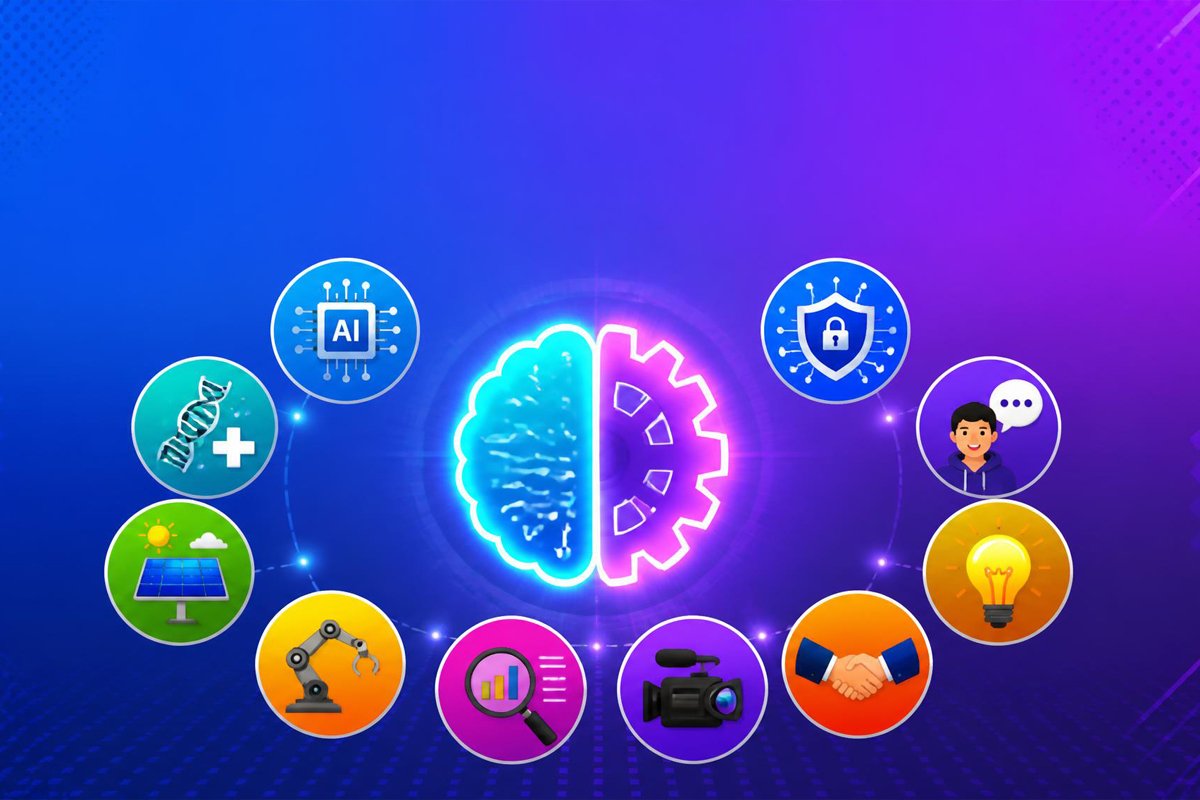
The good news is that the future job market isn’t just “learn AI or get replaced.” It’s more specific than that — a mix of technical roles, hybrid human-plus-AI roles, and entirely human-centered careers that AI makes more valuable, not less. Below are 10 career paths positioned to matter most over the next decade, based on where hiring demand, investment, and structural economic shifts are actually pointing — not hype.
If you’re already building an online presence around your own expertise, this pairs naturally with our guide on personal branding for business owners — several of the careers below depend on visibility as much as skill.

1. AI / Machine Learning Engineer
AI and machine learning engineers build, train, and deploy the systems that power everything from recommendation engines to autonomous agents. Demand here isn’t slowing down — AI-related job postings have grown consistently across the tech sector, and salaries for these roles remain among the highest in technology.
Why it’s future-proof: Every industry, not just tech companies, is now hiring for AI implementation — finance, healthcare, retail, and manufacturing are all building internal AI teams. How to start: Core programming (Python), a solid foundation in statistics, and hands-on projects using established frameworks matter more early on than a specific degree. Our post on AI skills to learn before 2028 is a useful starting map.
2. AI Product Manager
As companies move from experimenting with AI to fully implementing it, someone has to bridge the gap between what a model can technically do and what a business actually needs. That’s the AI product manager — part strategist, part translator between engineering and leadership.
Why it’s future-proof: This role barely existed five years ago and is now one of the fastest-growing hybrid positions, precisely because AI capability without business judgment tends to go nowhere. How to start: Product management fundamentals (roadmapping, user research, prioritization) plus enough technical AI literacy to understand what’s realistic. Business-minded people with a willingness to learn AI basics often move into this faster than engineers moving into product.
3. Data Analyst / Data Scientist
Every AI system runs on data, and someone has to clean it, structure it, and turn it into decisions. Data roles have shifted from a “nice to have” to core infrastructure across nearly every mid-sized and large company.
Why it’s future-proof: As AI tools automate more routine analysis, the analysts who thrive are the ones who can ask the right business questions, not just run the query — a skill that becomes more valuable, not less, as the tooling improves. How to start: SQL, spreadsheet fluency, and a genuine curiosity about business problems go further early on than mastering every visualization tool. Data storytelling — explaining what a number means to a non-technical audience — is an underrated differentiator.
4. Cybersecurity Specialist
As more business processes move online and AI systems introduce new attack surfaces, cybersecurity hiring has stayed resilient even through broader tech hiring slowdowns. Employers report real difficulty filling these roles, and are willing to pay a premium for qualified candidates.
Why it’s future-proof: AI doesn’t reduce the need for security expertise — it expands it, since AI systems themselves need to be secured against manipulation, data leaks, and adversarial attacks. How to start: Foundational IT and networking knowledge first, then a security specialization (cloud security, application security, or governance) — certifications carry real weight in this field compared to many others.
5. AI Ethics & Governance Specialist
As AI gets embedded deeper into hiring, lending, healthcare, and legal decisions, organizations need people who can evaluate whether a system is fair, compliant, and safe to deploy — not just whether it works technically.
Why it’s future-proof: Regulation of AI systems is still early and accelerating globally, which means demand for governance expertise is likely to grow for years, not shrink once “the AI boom settles down.” How to start: This role rewards people who combine some technical AI literacy with backgrounds in law, policy, philosophy, or compliance — it’s one of the clearer paths for non-engineers to build a serious AI-adjacent career.
6. Robotics & Automation Engineer
Physical automation — warehouses, manufacturing, logistics, even agriculture — is accelerating alongside software AI, and the engineers who can design, program, and maintain robotic systems sit at the intersection of both.
Why it’s future-proof: Labor shortages in manufacturing and logistics, combined with falling robotics hardware costs, are pushing automation into mid-sized businesses that couldn’t previously afford it — widening the hiring pool well beyond large manufacturers. How to start: A mechanical or electrical engineering foundation paired with programming skills (often Python or C++) opens the door; many entry points now come through vocational and technical programs, not only four-year degrees.
7. Renewable Energy & Sustainability Specialist
Independent of AI hype entirely, the shift toward renewable energy and corporate sustainability reporting is creating steady, structural demand — from solar and wind technicians to ESG (environmental, social, governance) analysts inside large companies.
Why it’s future-proof: This demand is driven by regulation, cost economics, and climate reality, not a tech trend cycle — it tends to be more resilient across economic downturns than purely discretionary tech spending. How to start: Entry points range widely — technical trades (solar installation, wind technician training) require certification programs measured in months, while ESG analyst roles benefit from a business, finance, or environmental science background.
8. Healthcare Technology Specialist
The overlap between healthcare and technology — health data systems, medical AI tools, telehealth infrastructure, bioinformatics — is one of the steadiest long-term growth areas, driven by demographics (aging populations) as much as by innovation.
Why it’s future-proof: Healthcare demand doesn’t disappear in a downturn, and the sector has historically been slower to adopt technology than others, which means there’s a long runway of modernization work still ahead. How to start: Paths vary widely — health informatics programs, nursing-plus-technology hybrid roles, or a software background applied specifically to healthcare compliance and systems (like HIPAA-compliant data platforms).
9. Prompt Engineering & AI Workflow Design
As AI shifts from simple “copilot” assistance to autonomous agents managing multi-step workflows, someone needs to design how those workflows actually work — what the AI handles, where a human checks in, and how errors get caught before they cause damage.
Why it’s future-proof: This isn’t just about writing clever prompts — it’s evolving into a genuine systems-design discipline as businesses hand more real workflows over to AI agents, and the design decisions around that handoff carry real consequences. How to start: Hands-on experimentation with current AI tools, paired with process-mapping skills borrowed from operations and business analysis, builds this faster than any single certification. Our Claude prompts for a 12-month SEO strategy post is a small practical example of this kind of workflow thinking applied to one specific business function.
10. Content Creator & Personal Brand Entrepreneur
The creator economy — YouTube, newsletters, niche communities, personal-brand-driven consulting — keeps growing precisely because AI can automate production tasks but can’t replicate a specific person’s trust, taste, and audience relationship.
Why it’s future-proof: As AI makes content production faster and cheaper for everyone, the scarce resource becomes genuine audience trust and a distinct point of view — which is a compounding asset, not a one-time skill. How to start: Pick one platform, one specific audience, and one consistent format, and commit to it for real months, not weeks. Our guides on personal branding, content marketing strategy, and social media scheduling tools cover the practical mechanics of actually building this consistently.
How to Choose Which One to Pursue
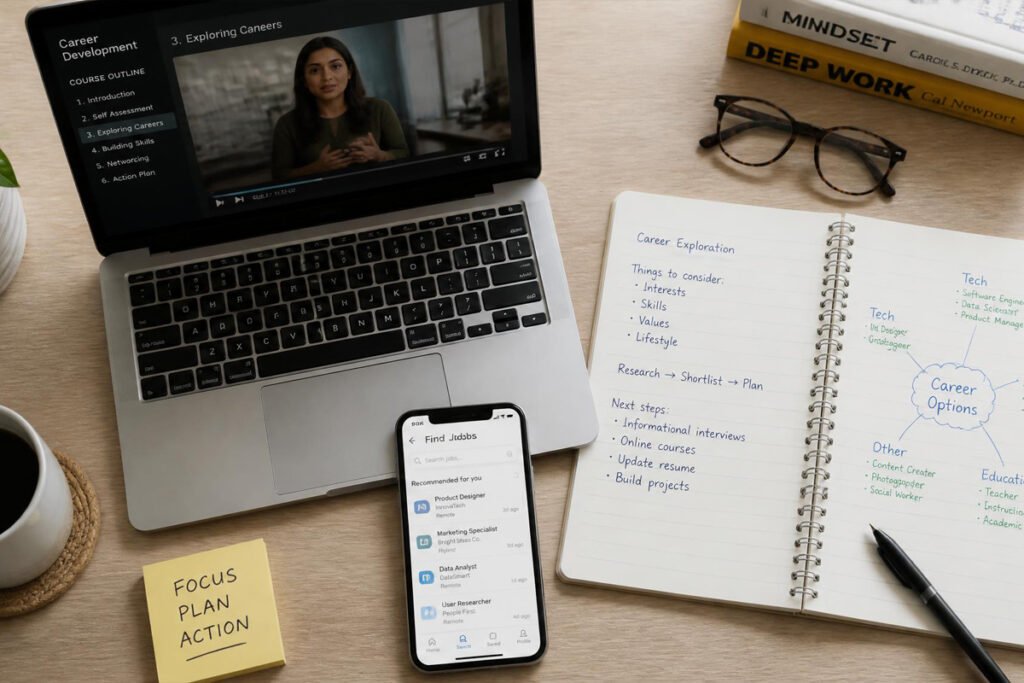
Don’t pick based on which career sounds most impressive — pick based on genuine fit:
- What do you already gravitate toward without being told to? Technical building, people and communication, analysis and patterns, or physical/hands-on systems — each points toward a different cluster on this list.
- How much retraining time can you realistically commit? Some paths (prompt engineering, content creation, sustainability analyst roles) have shorter on-ramps than others (AI/ML engineering, healthcare technology) that often require formal education.
- Do you want to work inside a company, or build something of your own? Roles like AI product manager and cybersecurity specialist are largely employment-based; personal branding and content creation are inherently entrepreneurial.
A Common Mistake to Avoid
The biggest mistake right now isn’t picking the “wrong” career from this list — it’s waiting for total certainty before starting. The skills gap employers report isn’t because these fields are impossibly hard to enter; it’s because most people delay starting until the field feels fully “figured out,” by which point early movers already have a two-year head start. Small, consistent progress — one course, one project, one piece of public content — compounds the same way it does in SEO or any other long-term skill: slowly, then all at once.
Final Thoughts
No single list can predict the future perfectly, and the honest truth is that resilience matters more than any specific job title. The World Economic Forum consistently ranks critical thinking, complex problem-solving, and adaptability among the most durable skills regardless of which of these ten paths someone chooses — because those are the skills that let a person pivot when the next shift inevitably comes.
If there’s one practical next step, it’s this: pick the career above that overlaps most with what you’re already curious about, and give it a real, honest three months of consistent learning before judging whether it’s the right fit.
Author: DIGI MONETIZE Team Last Updated: August 2026